
Predator 2 story
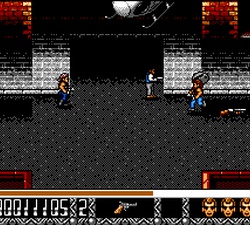
Predator had a special charge in the ’90s: the grind of a VCR, that thermal‑vision poster, Danny Glover going stubbornly toe‑to‑toe with an alien hunter in a sun‑baked Los Angeles. When a cartridge copy of Predator 2 hit shelves beside the tapes — that “Predator 2 on the Sega” — it felt like the same myth continued, only now the pad was in your hands. No fuss: power on, a tight, rubbery beat kicks in, and suddenly you’re not a spectator — you’re the lieutenant tearing through streets and subway stations. “Predator 2 (Mega Drive),” “Predator II,” “the game based on Predator 2” — call it what you want, you recognized it from the first screen.
From film to cartridge
The source material was rock solid: the 1990 movie, a mean, heat‑soaked action thriller about a hunter dropping into a city already at war. Sega snapped up the 20th Century Fox license; versions landed on the Master System and Game Gear, but it was Predator 2 on the Mega Drive/Genesis that got traded around in playgrounds and arcades. Not a dry tie‑in, but an arcade run‑and‑gun cut to the pulse — brisk, isometric, turning the film into a string of tense vignettes: blocks, rooftops, the subway, the slaughterhouse, and somewhere ahead that trophy room and final ship — an “ending” you wanted to nail in one sitting.
Predator 2 on Mega Drive arrived when 16‑bit carts were shorthand for “just like the movies.” It wasn’t about dialogue — there’s barely any — it was about vibe: sirens, crisp gunshot samples, and L.A.’s heat somehow bleeding through an isometric camera. The faces felt familiar, while the story flipped the chase: you rescued civilians while hunting an invisible “guest,” its tri‑laser whistling somewhere off‑screen. That’s how Predator 2 on Genesis found its voice — no long preamble, just attitude.
How it reached us
In our neck of the woods, Predator 2 spread in wonderfully crooked ways. Sometimes it was a lone cart with an aggressive sleeve — a film still and a giant “Predator 2 Sega” stamp. Sometimes it rode a multicart “8‑in‑1,” stickered as “Predator II.” At rentals, a clerk might just Sharpie “the game about the Predator from the movie” — and that was enough. Ask an arcade for “something based on a film” and the owner would slide over a cart labeled “game based on Predator 2” with a wink: it’s got the subway, it’s got the alien. The legend hopped across garages, kiosks, and flea markets on word of mouth.
It stuck in a lot of collections simply as “Predator 2 on the Sega,” and even when someone asked “the Mega Drive one?,” everyone already knew. Bootleg stickers promised a “Russian version,” but there was hardly any text — not that it needed it. What mattered were passed‑down tips: where the medkit spawns, how to survive the station, when to sprint to beat the laser. Some called it a “Predator 2 walkthrough,” others just “secrets.” We learned it like playground rules — through repetition and pure hype.
Why we loved it
The angle sold it — that isometric view made Los Angeles look like a tabletop diorama, but the tension was real. “Arcade shooter” sounds clinical; in practice, Predator 2 on Mega Drive bottled that hunter’s jitters: a scream rings out, a blip flashes on the map, you can feel the alien’s aim lining up — and you bolt like a live wire. Some of us were in it for the bosses, others for the train sequences, others for those compressed city blocks where every window seemed to stare back. The soundtrack didn’t blare; it nudged: one more hostage, one more push, and the “ending” with the ship flickers ahead, along with that cold shiver from the trophy wall.
More than anything, Predator 2 bridged movie and console not with quotes but with rhythm. Where the film pressed down with heat and steel, the cart answered with pace and sharp, memorable beats. That’s how the “Predator 2 review” you tell from memory is born — not about pixels, but about sensation: the first rooftop where you realize something’s peeking over the parapet; the slaughterhouse where your temples thump in sync with the pad; the final trophy chamber that made you hit pause and just stand up.
Its own legend
These days we know licensed games can go either way, but Predator 2 (Mega Drive) holds a special reputation — not loud, but stubbornly solid. It’s one of those ’90s‑scented slabs of plastic: the 16‑bit badge, the crackle of a tired CRT, the courtyard chatter — “did you finish it?,” “did you make it through the subway?” Chasing that feeling, people still search “Predator 2 Sega review”; some fire up a “Genesis playthrough” stream, others dig for “secrets,” all for that vibe of sitting on the floor again, waiting for everything to click.
And that’s probably the real story of Predator 2 on a console: it didn’t make us love movies less — it taught us to live them with our hands. So it’s easy to bounce from names — “Predator 2 on Sega,” “Predator 2 on Mega Drive,” “Predator II on Genesis” — straight into memories. We don’t remember the logos so much as how we rode those short, punchy set‑pieces together, and how the game moved from apartment to apartment, city to city, across an invisible map, lighting up little beacons wherever another player was ready to join the hunt.